
Transforming Healthcare Through Integrated Insight: Where Clinical and Executive Perspectives Meet
By Dr. Jaisri R. Thoppay
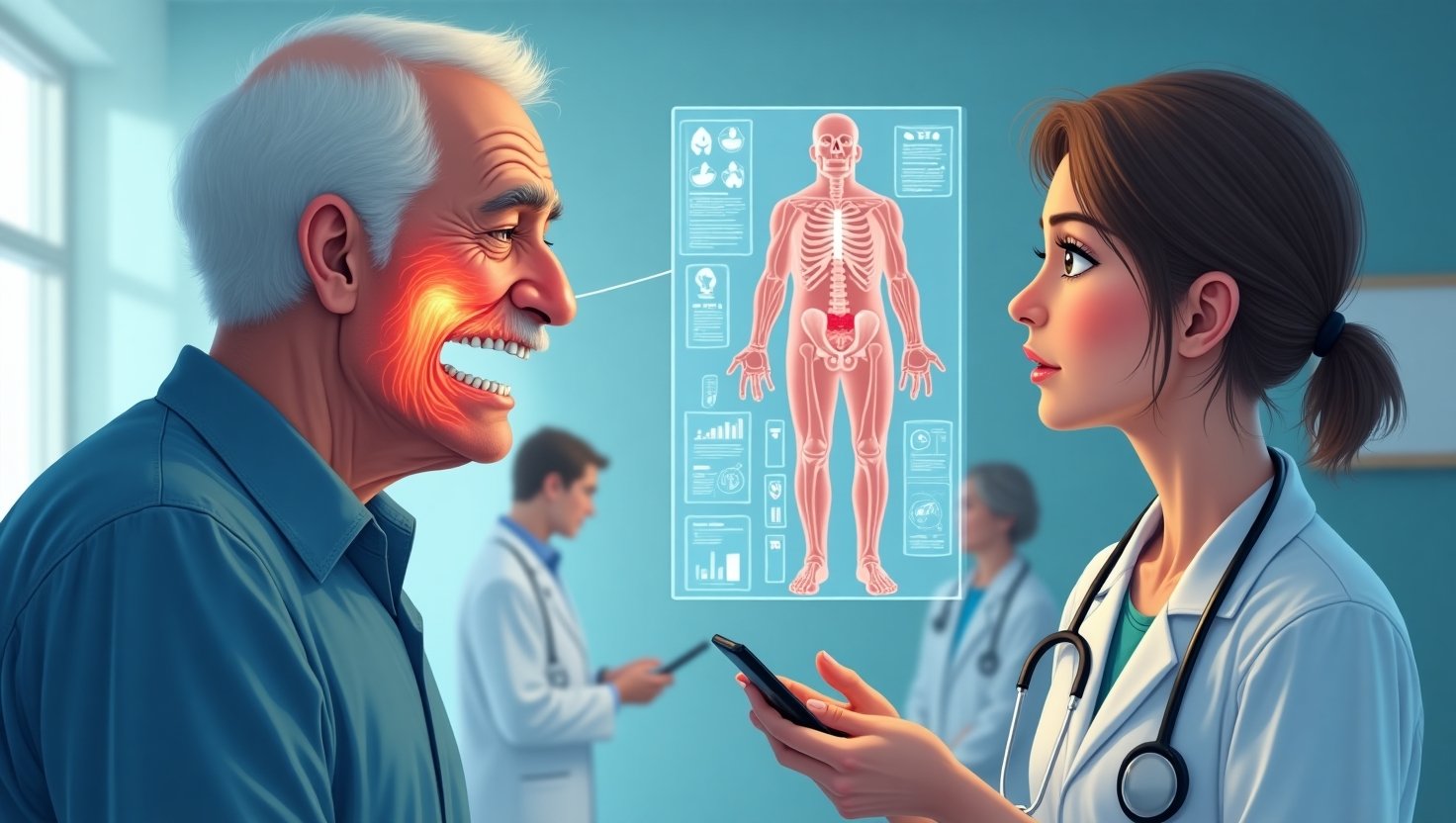
Meet Mr. J, a 74-year-old gentleman who arrived at our clinic visibly distressed. He hadn’t eaten a full meal in days. His jaw ached. His ear throbbed. His mouth barely opened. He was scared and rightly so.
But what spoke even louder than his words? A subtle limp. A faint scar on his knee from a joint replacement. A stiff, halting gait the quiet signal of multi-joint arthritis.
That moment was a vivid reminder: we’re not treating a jaw. We’re caring for a whole person. After a thorough evaluation and targeted imaging, we confirmed what his body had been telling us is a diagnosis of TMJ Degenerative Joint Disease, a common, yet often overlooked, condition in older adults with osteoarthritis. Now has limited eating due to his jaw leading to other issues, poor energy leading to poor Musculoskeletal status.
His Story Highlights a Critical Truth:
- TMJ pain in the elderly is not just an oral health issue.
- Limited mouth opening leads to malnutrition, social withdrawal, and functional decline.
- Chronic ear pain- sometimes, it’s the jaw causing it.
When we step back and examine the entire picture: mobility, medical history, joint health, and mental wellbeing, we can connect the dots more efficiently, treat more precisely, and care more deeply.
Geriatric syndromes demand more than siloed care. They require integrated thinking, interdisciplinary collaboration, and a compassionate, whole-person approach.
The Health Economics Perspective
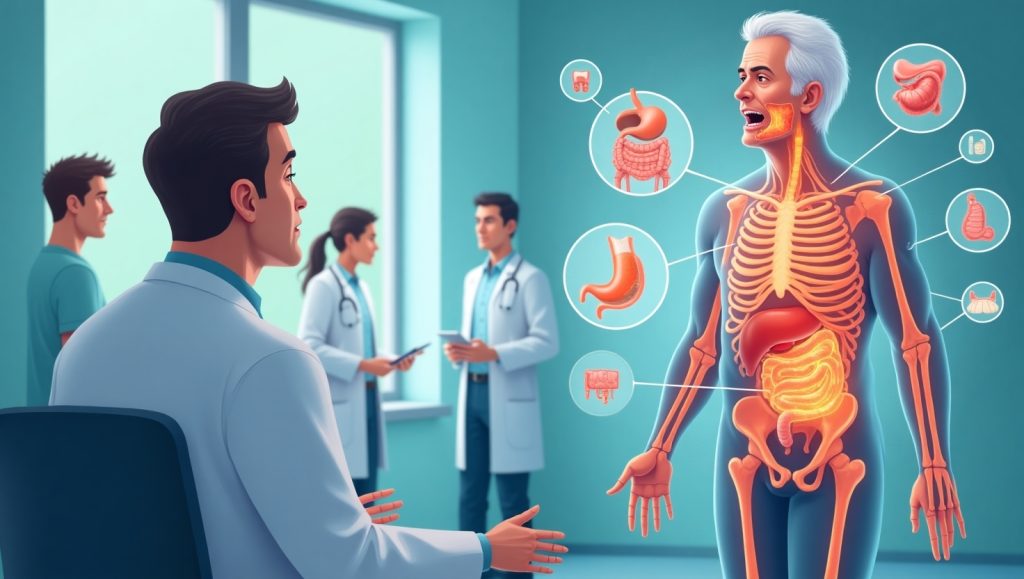
Undiagnosed or mismanaged TMJ disorders in older adults are more than clinical oversights they are costly system failures:
- Increased ER visits for unrelieved facial pain
- Nutritional deficits and unintended weight loss
- Elevated aspiration risk and hospitalizations
- Accelerated functional decline triggering long-term care placement
DATA: Recent research indicates that integrated care models can lead to significant healthcare cost savings. A systematic review and meta-analysis published in The European Journal of Health Economics analyzed 34 studies and found that integrated care was associated with a 5.6% reduction in costs and a 6.2% improvement in outcomes compared to standard care. Notably, studies with follow-up periods longer than 12 months demonstrated even greater cost reductions of 13.2% and improved outcomes by 14.8%. PMCID: PMC7561551 PMID: 32632820
While these figures are promising, it’s important to note that the exact percentage of cost savings can vary depending on the specific integrated care model and patient population. For instance, a study evaluating an interdisciplinary care team (IDCT) program for high-risk Medicare Advantage beneficiaries reported monthly cost reductions ranging from $1,121.76 to $1,625.61 per member, leading to a net annual savings of approximately $1.9 million. PubMed
These findings emphasizes the potential of early diagnosis and coordinated, interdisciplinary care in not only improving patient outcomes but also in reducing downstream healthcare costs.
Where Health Data Meets Clinical Insight
This case wasn’t solved by intuition. It required: interoperability
- Integration of dental and medical EHRs
- Pattern recognition linking osteoarthritis and TMJ degeneration
- Now-utilizing real-time risk stratification using AI-enabled decision support
- Collaborative interdisciplinary planning Key take away: Fragmentation often masks the true burden of disease.
Let’s break down the silos. Let’s connect the data. Let’s treat the whole person. Because sometimes, saving a smile means saving a life.
Jaisri R Thoppay BDS, MBA, MS, DABOM, MSHA
- Dentist, Diplomate American Board of Oral Medicine
- CEO, Center for Integrative Oral Health inc. Winter Park, Fl
- CEO & Co-Founder, Nenotics LLC, Winter Park, Fl
- President 2025-26, American Academy of Oral Medicine